
Your Roof Won't Survive a Hurricane
Learn the clearest signs your roof won't survive a hurricane in Florida, from lifted shingles to attic moisture, before the season peaks.

Adrian Coastal Roofing

Most roof failures during a hurricane are not sudden. They are the final stage of a problem that was visible for months, sometimes years, before the storm ever formed in the Atlantic. Knowing the signs your roof won't survive a hurricane gives you the chance to fix a small issue for a few hundred dollars instead of facing a collapsed section, a soaked attic, or a total replacement after the wind and rain move through.
At Coastal Roofing Group, we inspect Florida roofs year-round, and the pattern repeats every season: the roofs that fail worst are almost never the newest ones. They are the roofs where early warning signs were noticed and then quietly ignored. This article walks through the clearest signs your roof won't survive a hurricane, why each one matters structurally, and what to do about it before the next named storm approaches Florida.
Visible Roof Damage Signs Florida Storms Expose First
Some of the most reliable signs your roof won't survive a hurricane are visible from the ground, without ever climbing a ladder. Walking the perimeter of your home and looking up carefully reveals more than most homeowners expect.
Watch for these roof damage signs Florida properties commonly develop over time:
- Curling or lifted shingle edges, which create a gap wind can catch and rip open
- Missing or cracked tiles, particularly clustered near ridgelines, hips, and roof edges
- Exposed or worn fasteners, where nail heads or screws have backed out from repeated thermal expansion
- Dark streaking or algae growth, which often points to trapped moisture beneath the surface layer
- Sagging areas along the roofline, a strong indicator of weakened decking underneath
Any one of these roof damage signs Florida inspectors flag on its own may seem minor. Combined, though, they describe a roof system that has lost the structural integrity needed to resist sustained hurricane-force wind. A roof with several of these roof damage signs present at once is far more likely to suffer a partial or full failure than one with a single isolated issue, which is why a full inspection matters more than spot-checking one problem area.
Granule loss is another one of the roof damage signs Florida homeowners frequently overlook. If your gutters are collecting a noticeable amount of gritty, sand-like debris after rain, your asphalt shingles are shedding their protective coating. That coating is what blocks UV damage and helps shingles stay flexible enough to withstand wind uplift, so its absence is a genuine structural warning, not just a cosmetic one.
Interior and Structural Warning Signs Inside Your Attic
Not every one of the signs your roof won't survive a hurricane is visible from outside. Some of the most serious problems only show up once you step into the attic with a flashlight, and by the time they are obvious from inside the house, the damage is usually already significant.
Inside the attic, look for these interior warning signs:
- Daylight visible through the roof decking, which means there is already a gap large enough for wind-driven rain to enter
- Damp or discolored insulation, a sign that water has been getting in gradually, often for months
- Dark staining or mold along rafters and trusses, indicating a slow leak that has gone unaddressed
- A musty smell, even without visible staining, which frequently points to trapped moisture inside the roof assembly
- Soft or spongy decking when pressed gently, a sign the plywood has begun to rot from repeated moisture exposure
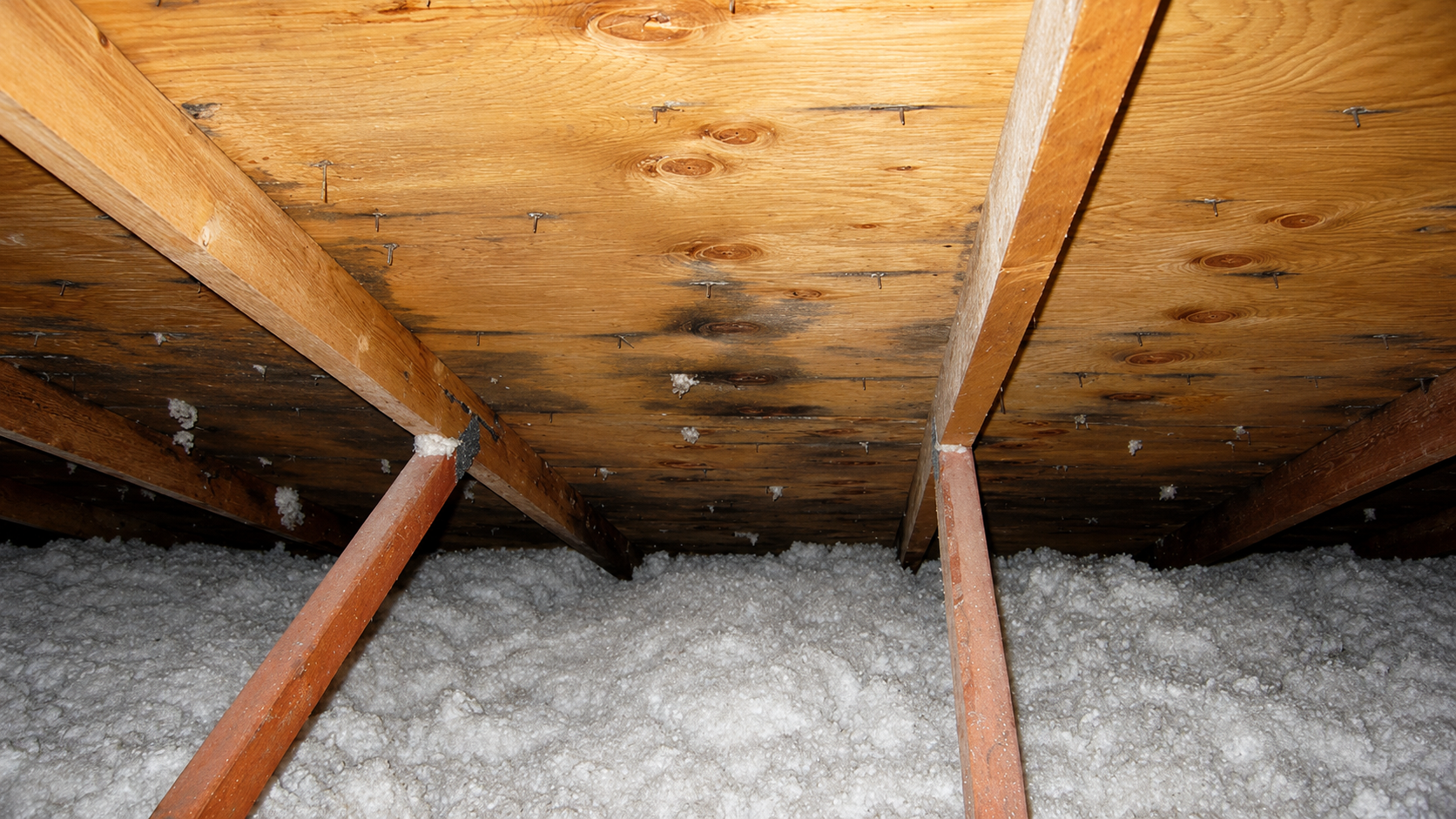
These interior signs your roof won't survive a hurricane are especially dangerous because homeowners rarely check the attic regularly. A leak that started during a routine afternoon thunderstorm in June can quietly weaken the decking for weeks before hurricane season reaches its peak, and by then, that weakened section is the first place a strong gust will fail.
Roof age plays a direct role here as well. Asphalt shingle roofs typically last twenty to twenty-five years, and as a roof approaches or passes that mark, minor issues compound faster. A fifteen-year-old roof with a small amount of granule loss is a very different risk profile than a five-year-old roof with the same wear, which is why professional inspectors weigh age alongside visible condition when evaluating the signs your roof won't survive a hurricane this season.
Why Ignoring These Warning Signs Costs More Later
It is worth pausing on why so many homeowners miss the signs your roof won't survive a hurricane until it is too late. Roofs age slowly and unevenly, and a small patch of curling shingles or a faint musty smell in the attic rarely feels urgent in the middle of a busy week. The problem is that hurricane season does not wait for a convenient time to test those weak points.
Property managers overseeing multiple buildings face this risk multiplied across every roof they are responsible for. A single overlooked warning sign on one property can turn into a widespread claim, a displaced tenant, and weeks of remediation. Building a habit of checking for the signs your roof won't survive a hurricane on a set schedule, rather than reacting only after a leak appears, is far cheaper than emergency repairs during peak season, when contractor availability and material costs both spike.
Documentation matters here too. Taking dated photos of any early warning signs, even minor ones, creates a record that helps both with prioritizing repairs and with insurance conversations later. If a storm does cause damage, having a documented history of the roof's condition beforehand, rather than discovering the signs your roof won't survive a hurricane only after the fact, makes the claims process considerably smoother.
Frequently Asked Questions
What is the most dangerous sign of roof damage before a hurricane?
Soft or spongy roof decking is generally considered the most serious warning sign, since it indicates the structural plywood underneath the shingles has already begun to rot. This significantly reduces the roof's ability to hold fasteners and resist wind uplift, making that section far more likely to fail during a storm.
Can a roof look fine from the ground but still be at risk?
Yes. Many of the signs your roof won't survive a hurricane, such as attic moisture, weakened decking, or backed-out fasteners, are not visible from the ground at all. This is why a full inspection that includes attic access is more reliable than a visual check from the yard alone.
How often should I check for these warning signs in Florida?
Florida roofing professionals generally recommend a full inspection at least once a year, ideally in spring before hurricane season begins, along with a quick visual check after any major storm. Homes with roofs older than fifteen years benefit from more frequent monitoring.
Should I repair or replace a roof showing multiple warning signs?
That depends on the roof's age, the extent of the damage, and how many separate issues are present. A licensed contractor can assess whether targeted repairs will hold up for the remaining life of the roof or whether the underlying damage is widespread enough that replacement is the more cost-effective option long term, especially once several signs your roof won't survive a hurricane are present at the same time.
Do insurance companies check for these warning signs before renewal?
Many Florida carriers now request a current roof condition report before binding or renewing a policy, particularly for roofs over a certain age. An inspection that documents the signs your roof won't survive a hurricane, or confirms their absence, gives homeowners a clearer picture of both their storm risk and their standing with their insurer.
Conclusion
Recognizing the signs your roof won't survive a hurricane before the storm arrives is one of the simplest ways to protect your home and avoid an emergency repair bill. From lifted shingles and granule loss to attic moisture and soft decking, these warning signs rarely appear without reason, and addressing them early almost always costs less than dealing with the aftermath of a failure.
If you have noticed any of these signs your roof won't survive a hurricane on your own property, don't wait for a storm to confirm it. Coastal Roofing Group provides thorough roof inspections across Florida and can tell you exactly where your roof stands before the season's peak arrives. Call (813) 497-4428 today to schedule your assessment.
About Adrian Coastal Roofing
Adrian is the CEO of Coastal Roofing, a company specializing in roof installation in Florida, recognized for its quality, reliability, and excellence in residential and commercial projects. With years of experience in the construction industry and Florida roofing, Adrian has built his reputation by delivering durable solutions that withstand the state’s extreme weather. Under his leadership, Coastal Roofing has become a leader in roof installation in Florida, offering modern systems such as TPO, PVC, metal roofing, and other efficient solutions to reduce costs and extend the lifespan of roofs.


